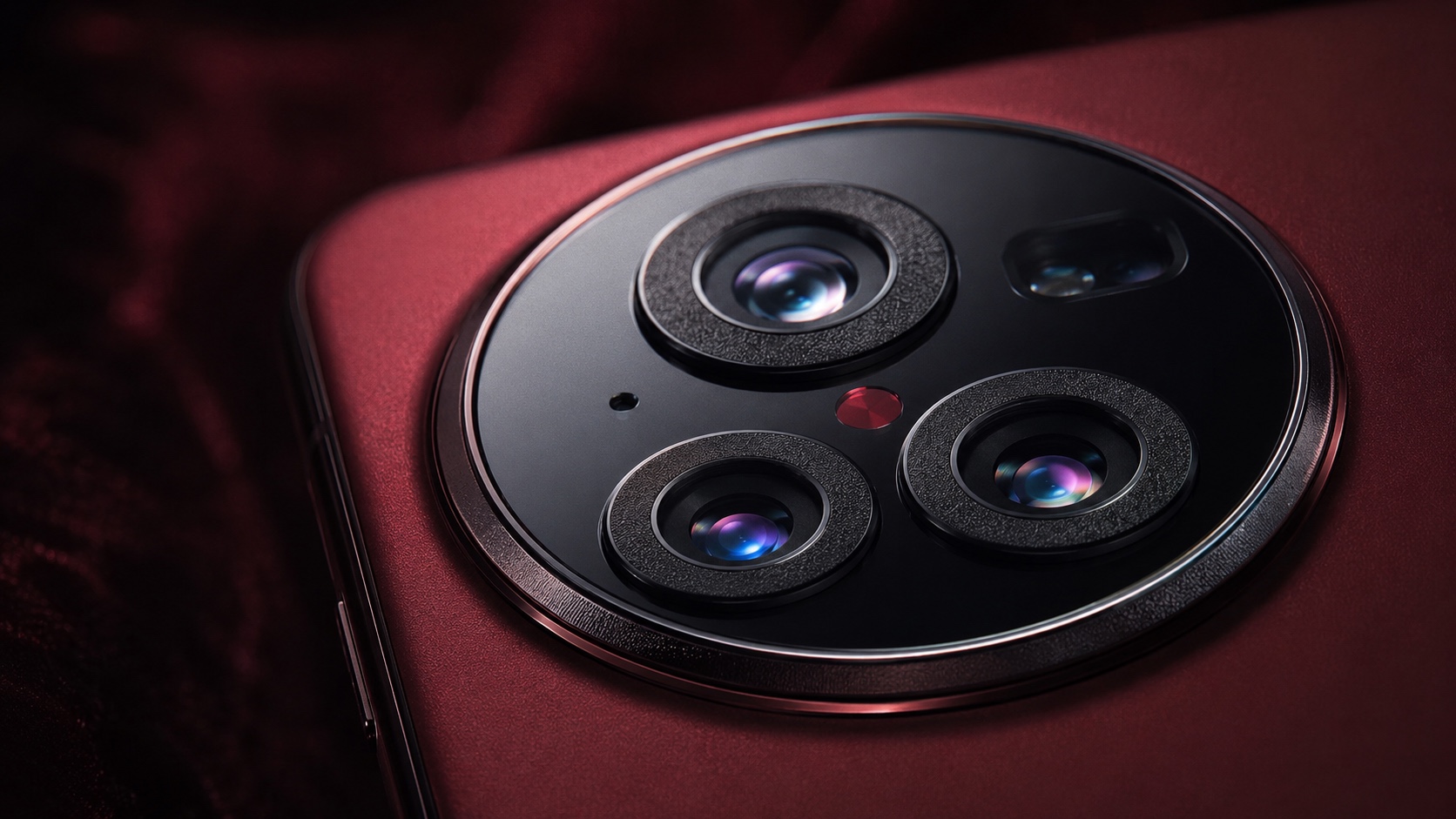
The Xiaomi 17 Max launched on May 21 in China and immediately landed among the most-viewed new phones this week, sitting right between the Samsung Galaxy A57 and the Galaxy S26 Ultra in global interest. It is, by some distance, the most aggressive phone Xiaomi has shipped this year. We have not held one yet, but the official spec sheet is now public and worth a careful look.
The headline numbers, with sources
Drawn from Xiaomi's official China launch and the published product spec sheet:
- Display: 6.9-inch LTPO AMOLED, 1200 by 2608 pixels, 120 Hz refresh rate, peak brightness rated at 3,500 nits according to Xiaomi's launch materials.
- Chipset: Qualcomm Snapdragon 8 Elite Gen 5, the same chip used in the Galaxy S26 Ultra.
- Memory: four variants. 12 or 16 GB of RAM, 256 or 512 GB of storage. No microSD.
- Cameras: 200MP f/1.7 main with optical image stabilization, 50MP f/2.4 ultrawide at 102 degrees, 50MP f/2.4 periscope telephoto with 3x optical zoom. All co-engineered with Leica.
- Battery: 8,000 mAh silicon-carbon Li-Ion, 100W wired charging, 50W wireless. 22.5W reverse wired charging.
- Build: 162.9 by 77.6 by 8.2 mm, 219 to 225 grams depending on finish. IP68 rated.
- Software: Android 16 with HyperOS 3 at launch.
- Launch price: about 610 EUR in China.
Two numbers on that sheet deserve a closer look.
The 200MP Leica main is the real headline
A 200MP sensor by itself is not new. The Galaxy S23 Ultra had one in 2023. What is new on the 17 Max is the sensor size, listed at 1/1.4 inch in pre-launch reporting, and the Leica co-engineering on the optics. A 1/1.4-inch main sensor is unusually large for any phone, and it is significantly larger than the 1/1.3-inch unit in the iPhone 17 Pro Max or the 1/1.4-inch in the S26 Ultra's reported main.
In practice, more sensor area means more light gathered per pixel, which means better low-light performance and shallower natural depth of field without computational tricks. The 200MP resolution is for marketing and pixel binning, the real benefit is sensor area.
The Leica color science remains the most polarizing part of any Xiaomi camera in this collaboration. Some reviewers love its desaturated, film-like signature. Others find it muted compared to the punch of Samsung's processing. Both takes are legitimate, neither will surprise you once you see sample shots.
The 8,000 mAh battery is not a trick
Silicon-carbon battery chemistry, sometimes labeled Si/C on Chinese spec sheets, is what allows 8,000 mAh into a body 8.2 mm thick at 219 grams. The Xiaomi 17 Max battery is explicitly listed as Si/C Li-Ion on Xiaomi's own spec sheet. This is the same chemistry trend behind the Honor Win series at 10,000 mAh and several other 2026 Chinese flagships pushing past 6,000 mAh.
Real-world endurance on the 17 Max is not yet measured in independent reviews, but the math suggests two full days of mixed use for moderate users, or one full day of heavy 3D gaming. Charging from zero to full at 100W takes around 30 minutes on Xiaomi's own brick.
Where this phone fits
The 17 Max is positioned as Xiaomi's pure-performance flagship for 2026. The Ultra and Pro Max designations sit elsewhere in the lineup. The 17 Max gets the largest battery, the brightest display, and the same Snapdragon chipset as the Pro Max, but a slightly less elaborate camera tuning and a more aggressive size and weight tradeoff.
It is the phone for people who care about raw performance and endurance more than they care about absolute camera headroom. If you do most of your photography in good light and you spend hours per day on the device, the 17 Max is the right Xiaomi for you. If you shoot a lot of low-light or video, the Pro Max or Ultra are better targets.
The Algerian timing problem
This is the uncomfortable part. The Xiaomi 17 Max launched in China only. There is no announced global or Middle East variant. Xiaomi's typical pattern is to release a global "T" series version a few months after the China launch, sometimes with the same hardware, sometimes with quieter compromises like a smaller battery for export markets.
For Algerian buyers, this creates three realistic timing paths:
- Wait for the global launch. This is the cleanest option. Xiaomi's typical China-to-global gap is around three to six months, so Q3 or Q4 2026 is the realistic window. The China launch price of about 610 EUR is the only public anchor for now.
- Buy a grey-market China unit now. Possible via Dubai routes, but the phone ships with Chinese system apps that are awkward to remove, no Google services pre-installed, and no local warranty. Grey-market units always carry a premium over the China RRP, and the gap depends on how much the importer chooses to charge.
- Wait for the global Xiaomi 17 Ultra. If your priority is the camera rather than the battery, the Ultra is the more globally-available choice and Xiaomi typically prices it within striking distance of the Max.
We would point most Algerian buyers toward option 1. The 17 Max is a great phone, but a China-region unit in a market with no Xiaomi service center is a recipe for frustration. Wait.
The honest verdict
If you live in China or have a forwarding address there, the Xiaomi 17 Max is one of the most interesting phones of 2026. Snapdragon 8 Elite Gen 5, an 8,000 mAh battery, a genuinely large main sensor, and a launch price under 700 EUR is a combination none of Apple, Samsung or Google can match in the same window.
If you live in Algeria, the right move is to bookmark the global launch and let the early-adopter friction happen to someone else. The phone will arrive. The question is whether you want to pay the China-grey-market tax to be three months early.


