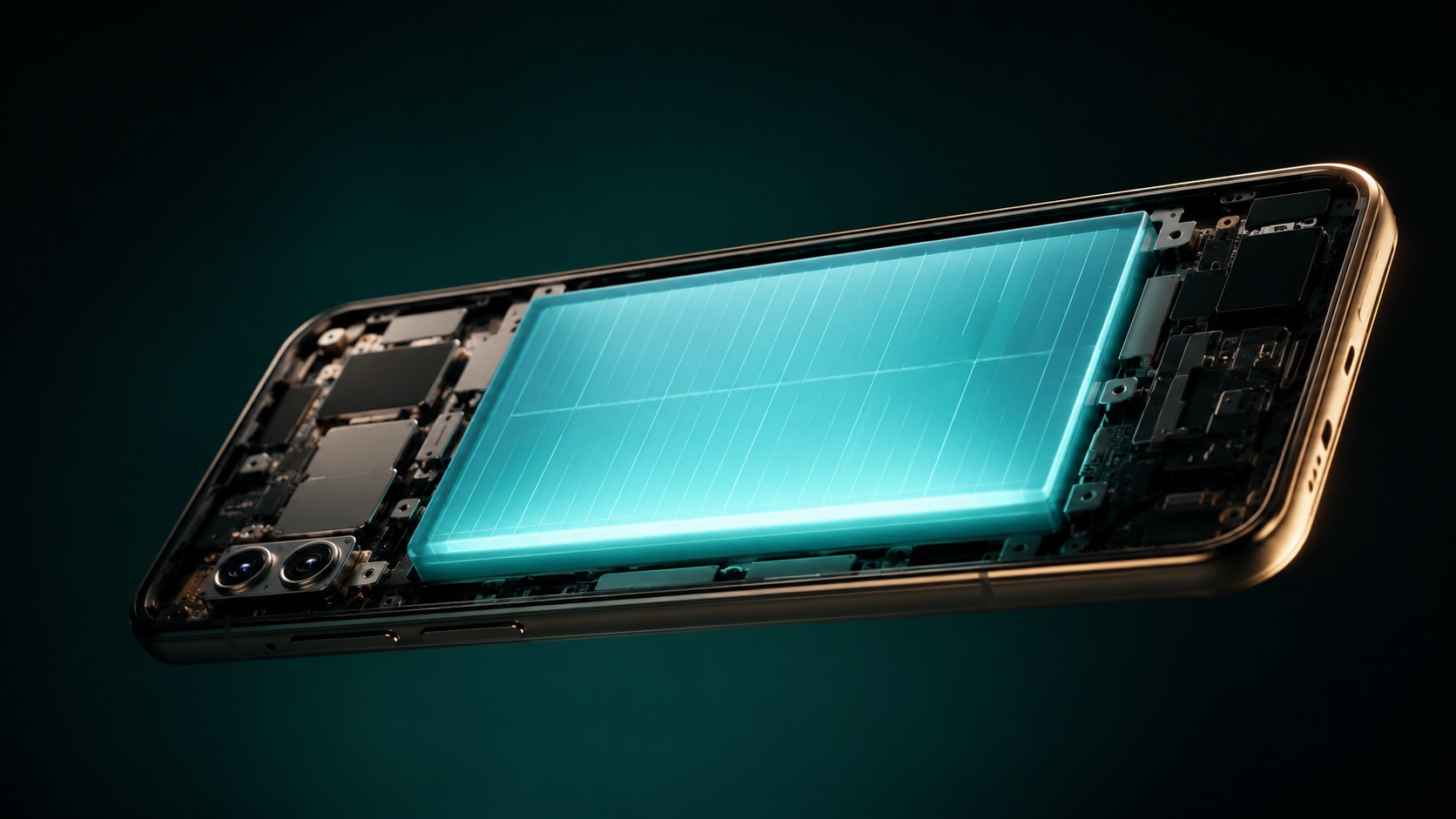
For roughly a decade, 5,000 mAh was the unofficial ceiling. Premium flagships sat there, mid-range Samsungs sat there, even the best Xiaomi Redmi Notes sat there. The argument was always the same: silicon is getting more efficient, you don't need a bigger cell.
In May 2026, that argument finally broke. Honor has confirmed a 10,000 mAh phone launching on May 29. Xiaomi shipped an 8,000 mAh flagship five days ago. Honor's mid-range 600e launched with 6,520 mAh. Infinix and Lava both pushed out new budget phones at 6,000 mAh. The 5,000 mAh number now belongs to one specific brand that does not want to follow.
What is actually launching, with real numbers
These are not leaks, these are devices already announced or shipped by the manufacturers this month.
Honor Win Turbo, launching May 29 in China. A 10,000 mAh battery, 80W wired charging, 27W reverse charging, a 50MP main camera in a triple setup. Honor is calling it a gaming and endurance device, with the company's own claim of more than 14 hours of continuous gaming or 22 hours of short-video streaming on a single charge. The standard Honor Win and Win RT already ship with the same battery size and an active cooling fan.
Xiaomi 17 Max, released May 21 in China. An 8,000 mAh silicon-carbon Li-Ion cell, 100W wired charging, 50W wireless. The phone runs on Qualcomm's Snapdragon 8 Elite Gen 5 with up to 16 GB of RAM, a 6.9-inch LTPO AMOLED at 120 Hz, and a 200MP Leica-tuned main camera with optical image stabilization. The launch price in China is around 610 EUR.
Honor 600e, launched this week. A 6,520 mAh cell with the MediaTek Dimensity 7100, sitting clearly in mid-range territory. The interesting part is not the chipset, it is that Honor put a 6,520 mAh battery in a mid-range phone without apology.
Infinix Hot 70, announced May 26. A 6,000 mAh battery, a 6.78-inch display, and a thermal paint technology Infinix says drops surface temperatures noticeably during gaming.
Lava Shark 2, announced May 26. A 6,000 mAh battery, a 120 Hz display. Lava is an Indian brand that lives entirely in the budget tier, so the 6,000 mAh number tells you where the floor has moved.
Add it up and the picture is clear. The mid-range floor is around 6,000 mAh. The flagship norm is 5,500 to 6,500 mAh. The new top end, for the brands willing to take the design tradeoff, is 8,000 to 10,000 mAh.
What changed
The technology shift behind these numbers is silicon-carbon, sometimes shortened to Si/C in spec sheets. The cathode side of a phone battery has not changed much in years. The anode side, traditionally graphite, has been replaced in many 2025 and 2026 phones by a silicon-carbon composite. The result is meaningfully higher energy density per cubic centimeter. Xiaomi explicitly lists the 17 Max battery as Si/C Li-Ion on its own spec sheet. Honor uses the marketing name "Qinghai Lake" for its higher-density cells.
The same chemistry is what lets the Xiaomi 17 Max fit 8,000 mAh into a body that is 8.2 mm thick and 219 to 225 grams. Three years ago, an 8,000 mAh phone meant a 14 mm brick with a separate plastic battery hump. Now it is a normal-sized flagship.
The brand that is not playing
Apple has not released a phone with more than around 4,700 mAh on any iPhone model, and Samsung's Galaxy A27, leaked in full this week, is launching in late 2026 with a 5,000 mAh cell and 25W charging. Both companies have publicly emphasized efficiency over raw capacity, and both rely on tight integration with their own chipsets to stretch real-world endurance.
The argument is defensible on paper. The real-world result is harder to defend. An iPhone 17 Pro Max user gets roughly a full day of mixed use. A Xiaomi 17 Max or Honor Win Turbo user will get two days of the same use, or one full day of heavy gaming. There is no efficiency story that closes that gap.
What it means for Algerian buyers
A few practical observations for our market specifically.
The Algerian power situation rewards big batteries. Power cuts in summer, especially in interior cities, are not theoretical. A phone that lasts two days on a charge is a meaningful insurance policy. The Honor 600e and Xiaomi 17 series are likely to do well locally for that reason alone.
Charging speeds matter less than they look on paper. Honor's 80W and Xiaomi's 100W charging require their own bricks. The Anker or Baseus 65W chargers most people already own will only deliver part of the rated speed. Budget for an OEM-compatible brick if you actually want the advertised charge time.
The Win Turbo will not be a normal Algerian import. The Honor Win series is China-only at launch, and Honor has been selective about which Win variants reach the Middle East. Expect to see grey-market units in Algeria at a meaningful premium, with no local warranty.
Xiaomi 17 Max global timing is unclear. Xiaomi typically launches a "T" or global variant a few months after the China launch. Real local availability with full warranty is more likely in Q3 2026 than now.
The honest verdict
If you are buying a phone in late 2026 and battery life is anywhere on your top three concerns, do not pay for a 5,000 mAh device unless the rest of the package is exceptional. The market has moved. The next four years of phones are going to ship with much bigger batteries, and the resale value of a 2026 phone with a small cell will reflect that.
The Honor Win Turbo at 10,000 mAh is the headline. The real story is that 6,000 mAh has quietly become the new normal.


